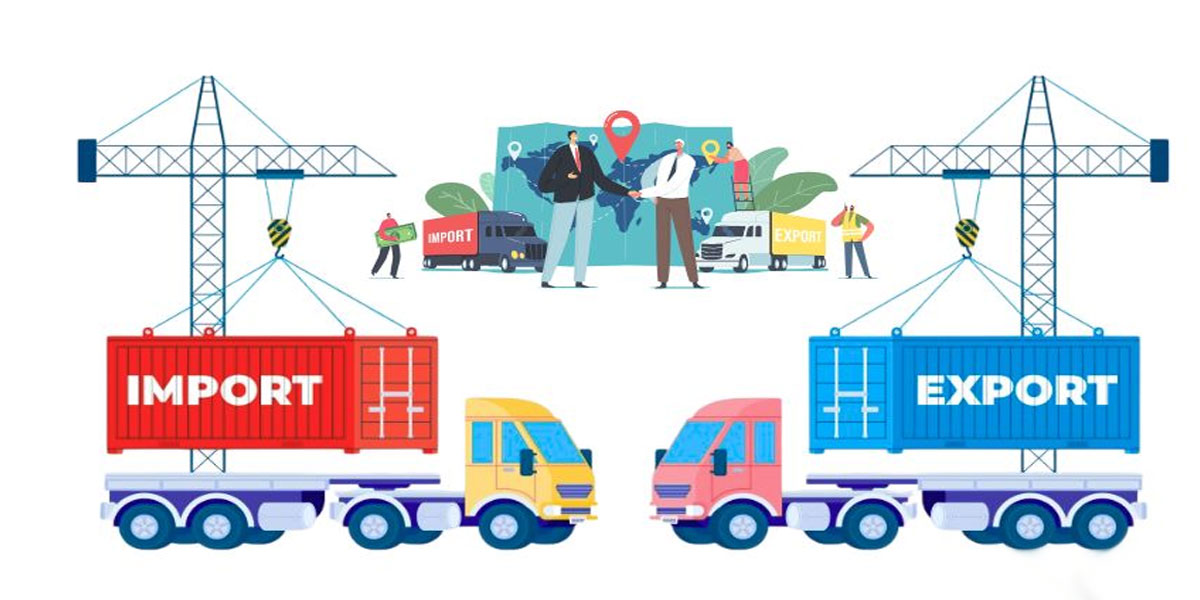
What happens after goods arrive at a UAE port, and how quickly can those goods reach another market? The answer depends on much more than transportation. Modern supply chains require coordinated customs procedures, suitable storage, inventory control, cargo movement, and access to multiple transport modes. The UAE has developed an interconnected trade and logistics environment where import, export, re-export, and warehousing operations can work together, allowing businesses to position inventory closer to regional markets while managing international cargo through ports, airports, free zones, and logistics facilities.
The process of importing goods into the UAE entails more than just moving cargo across the border. Companies are expected to adhere to the necessary customs process, document themselves accordingly, classify the goods, and perform the necessary clearing procedure.
Dubai Customs, for example, has customs declaration procedures for import, export, transit, transfer, and temporary admission. Import documents may consist of a commercial invoice, packing list, bill of lading or airway bill, certificate of origin, and permit where necessary. It depends on the cargo and mode of transport used.
This explains why the importance of documentation and coordination of customs processes in supply chain management is key. The cargo will not be able to proceed through the supply chain as planned once it has arrived at the port of entry.
Warehousing is one aspect of logistics that is used as a control between transportation of the cargo and the next phase in the logistics process. Rather than distributing each imported shipment to the customer, a business could warehouse goods closer to the target market based on its requirements.
This concept is facilitated within the free zones in the UAE since they provide warehousing facilities as well as customs-related services. According to the UAE Government, the free zones may also have customs bonded warehousing, near the port and airport and international trading facilities; the goods imported into the free zones do not pay customs duty until such time as the requirement of entry into the UAE domestic market comes.
Such a structure can prove extremely helpful for companies involved in regional distribution, seasonal stock, spare parts, machinery, and products bound for many international destinations.
Another notable characteristic of the UAE supply chain process is re-export activity. The purpose of importing goods into the UAE by a company may not be to sell them on the domestic market. The goods can come into the free zone area, be stored in the warehouse, undergo some permissible activities of value addition, and then go to another international destination.
Re-export, along with imports and exports, is regarded as one of the main activities possible for companies operating in the free zones according to the UAE Government. Additionally, Dubai Customs provides mechanisms for re-export activity in free zones and customs warehouses.
A modern supply chain cannot depend on one transportation method. Importers and exporters may need sea freight for large consignments, air freight for time-sensitive products, and road transportation for regional distribution.
Jebel Ali provides a strong example of this interconnected model. DP World describes the port as having sea, air, and land connectivity, while its wider UAE logistics network connects terminals, warehouses, customs partners, and transport providers.
The connection between port infrastructure and warehousing matters because every additional handover can affect cost, timing, documentation, and cargo visibility. Locating storage and logistics operations within or near major trade infrastructure can reduce unnecessary movement between separate facilities.
Inventory positioning has been a major aspect of supply chains. Companies operating in multiple markets have to deal with two conflicting factors: having sufficient inventories to satisfy the demand and keeping the unnecessary inventory costs under control.
Well-placed warehouses in the UAE may help to achieve this balance by making the products more accessible to consumers throughout the GCC countries, the Middle East, Africa, and other markets. For example, the Jafza warehouse is located between the Jebel Ali Port and Al Maktoum International Airport, providing multimodal connections to companies working in that region.
This way, the model of inventory positioning for distributors would be: import products in large quantities, keep them in the right place, and export in small consignments as per demand.
The modern supply chain also requires that information is transferred along with goods. The services involved in cargo handling, customs clearance, permits, certification, shipping, clearing, freight forwarding, and transportation have been brought together through the digital trade system by Dubai Trade.
Dubai Customs has also launched digital systems for its own work; one such system is an HS code classification and search platform powered by AI technology that aims to assist users in identifying commodity classifications, applicable customs duties, and restrictions on them.
Digital coordination could help businesses eliminate manual efforts and documentation errors, and stay more informed about cargo movement.
Importing, exporting, transportation, customs clearance, and warehousing should not operate as isolated functions. A delay in one stage can affect every stage that follows.
For example, incorrect classification can delay customs clearance. Delayed clearance can affect warehouse receiving. Delayed receiving can affect inventory availability. Limited inventory visibility can then affect customer fulfilment.
An integrated approach connects these stages into a planned flow. The objective is not simply to move goods into the UAE. The objective is to control how goods enter, where they are stored, when they move, how they are cleared, and where they go next.
That is why import, export and warehousing in the UAE have become closely connected elements of modern supply chain planning.
Businesses should evaluate several operational factors before selecting a UAE logistics and warehousing arrangement:
The right structure depends on the product, destination markets, trading model, shipment frequency, and regulatory requirements. A warehouse should therefore form part of the wider supply chain strategy rather than function as a standalone storage facility.
The UAE's mix of ports, airports, free zones, customs procedures, warehouses, and road infrastructure allows for different strategies for organising supply chains in an international context. The true value, however, lies in the alignment of these factors to the flow of cargo, warehousing needs, customs issues, and demands of customers.
If you are considering importing cargo to the UAE, warehousing your goods for regional distribution, re-exporting your cargo to other markets, or building a better logistics system, then proper planning can help you design the right structure for your trade and warehousing activities.
Wishing to improve your import/export and warehousing activities in the UAE? Feel free to contact us to discuss your needs regarding cargo handling, storage, and distribution logistics.